
What to Consider When Buying an Engagement Ring
12th of February 2026 by Jenna Steele and Megan Webb
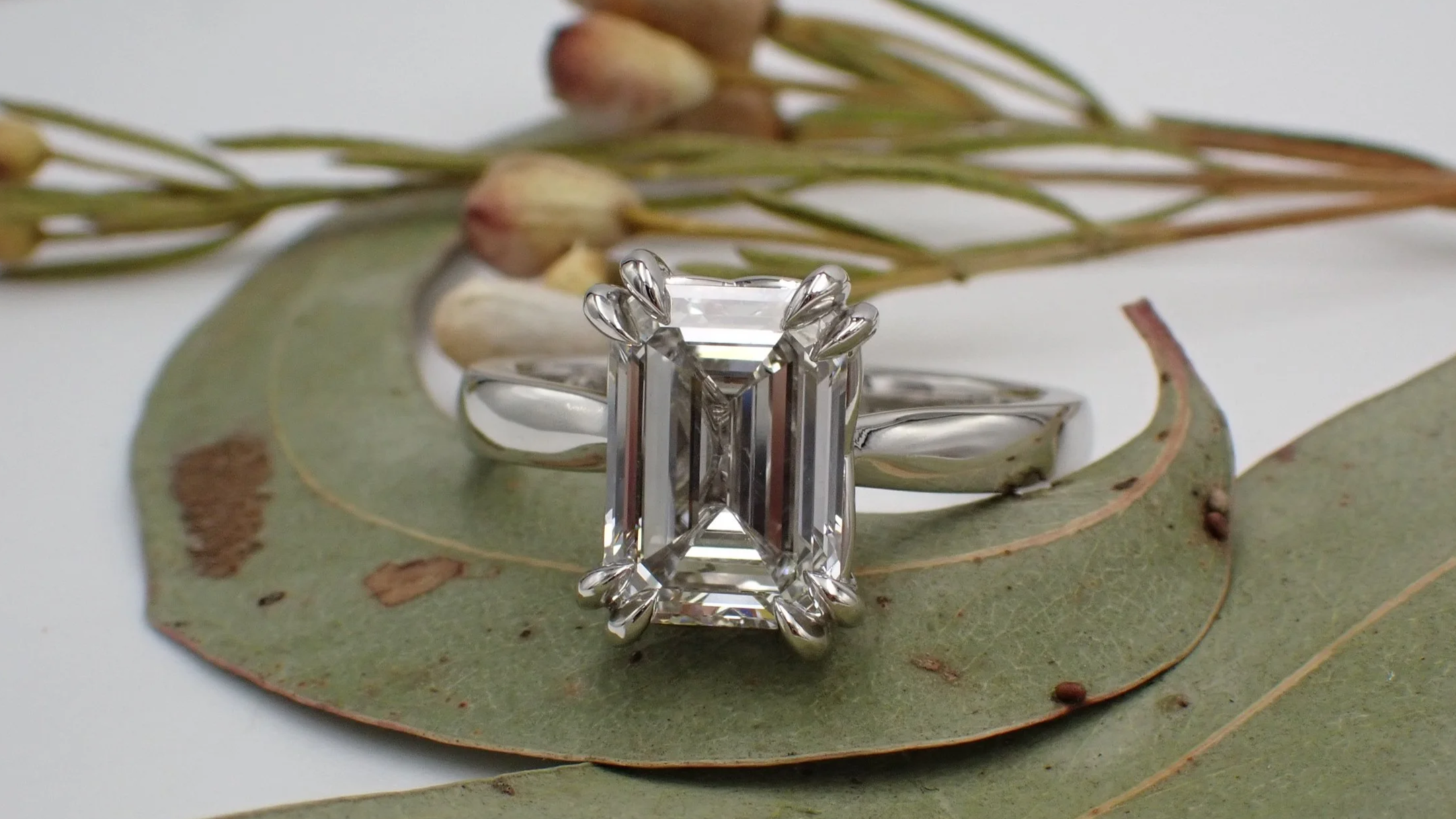
At Webb & Steele, we design and create custom made engagement rings in Melbourne, Australia. Every ring is designed and made in our studio in the Manchester Unity Building in the heart of the CBD. During design consultations we are frequently advising people on the many facets of engagement rings. So we have collated this information in hope of answering all your initial questions when you begin your search for that special ring.
Buying an engagement ring alone or together with your partner, hands down- it's a daunting process. There is so much to learn and many things to consider, especially if you're thinking about a bespoke creation. Never-mind the added stress of choosing something today that not only symbolises your love and the future you’re building together but to choose something that is unique as well as to ‘stand the test of time’. It's a tough task to say the least. But never to fear, we are here to help you. So please, read on...
How much does an engagement ring cost?
This is a curly question and the answer is basically “how long is a piece of string?”. When it comes to engagement rings there are so many alternatives and cost variances that it’s impossible to give a single answer.
You can spend a little or as much as you’d like depending on what you’re shopping for — whether that’s a one-of-a-kind bespoke engagement ring valued at $50,000, or a thoughtfully designed custom made ring around $5,000. There are options at both ends of the spectrum, and as Melbourne jewellers specialising in custom made engagement rings, we hope to paint a clearer picture of what is possible when you choose custom over a ready-made piece and what aspects matter more to you.
How much should I spend on an engagement ring in Australia?
You may have heard the old tale of spending ‘three months’ salary’. In our experience as Melbourne based custom jewellers of 20 years, this is mainly marketing folklore created by large jewellery brands and diamond merchants designed to make you spend more money.
We recommend spending what you feel comfortable with and what suits your lifestyle. When designing a bespoke engagement ring, the easiest first step is to get in touch, tell us your ideas and inspiration and preferred spend and we can guide you through what’s realistically possible. We can offer a chat on the phone or in person consultations in our Melbourne jewellery studio to go through all your options.
If you’re curious about what is ‘normal’ to spend, the average spent on engagement rings in Australia as of 2025 was $5,854, according to data collected by Q Report. However, engagement ring pricing varies widely depending on selected materials, manufacturing style, location and whether the ring is custom made or ‘off the shelf’. This spreads the average cost between $5,000-$15,000. So let’s take a deeper look into each of the contributing elements.
Firstly, what does an engagement ring look like?
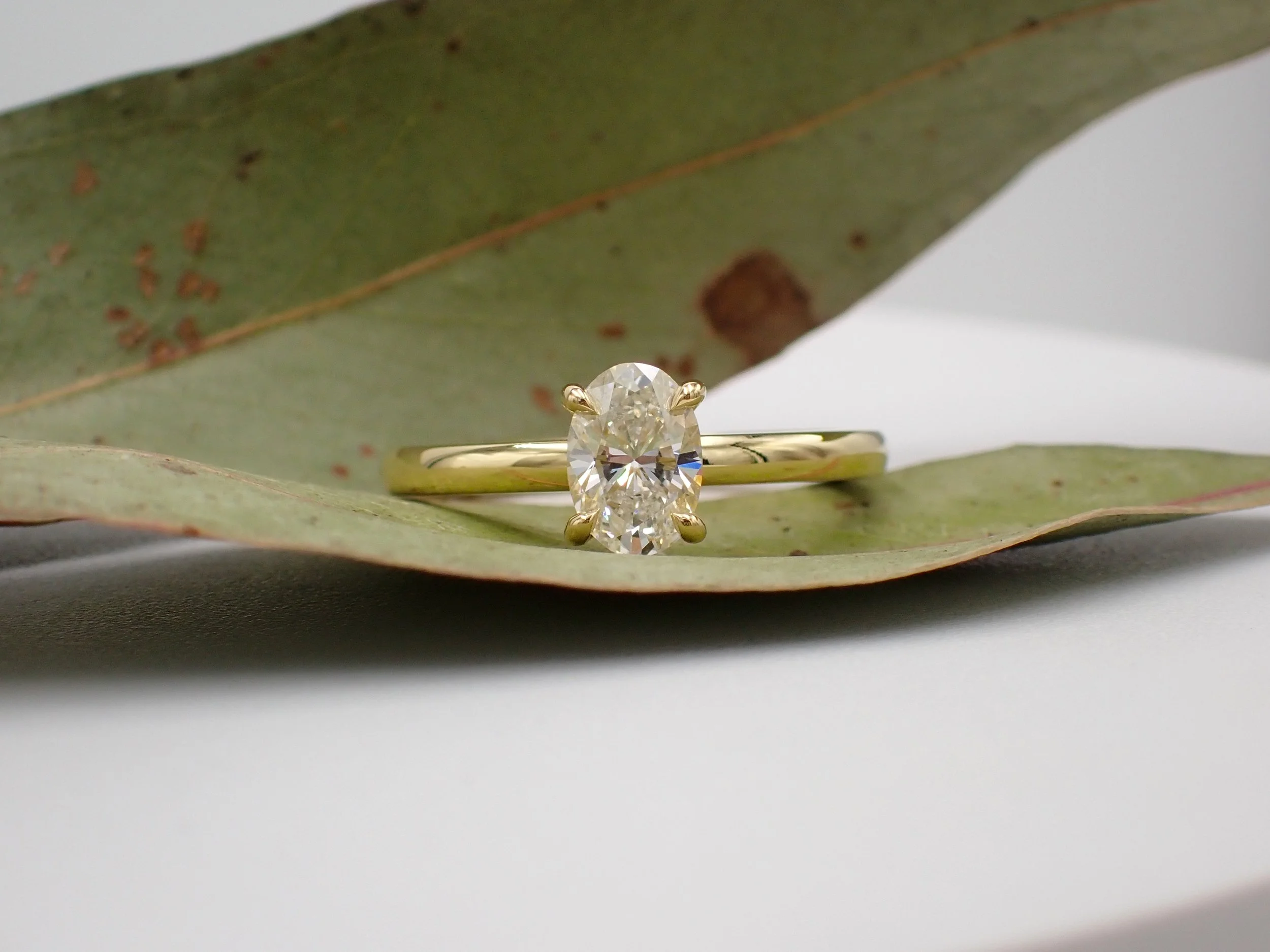
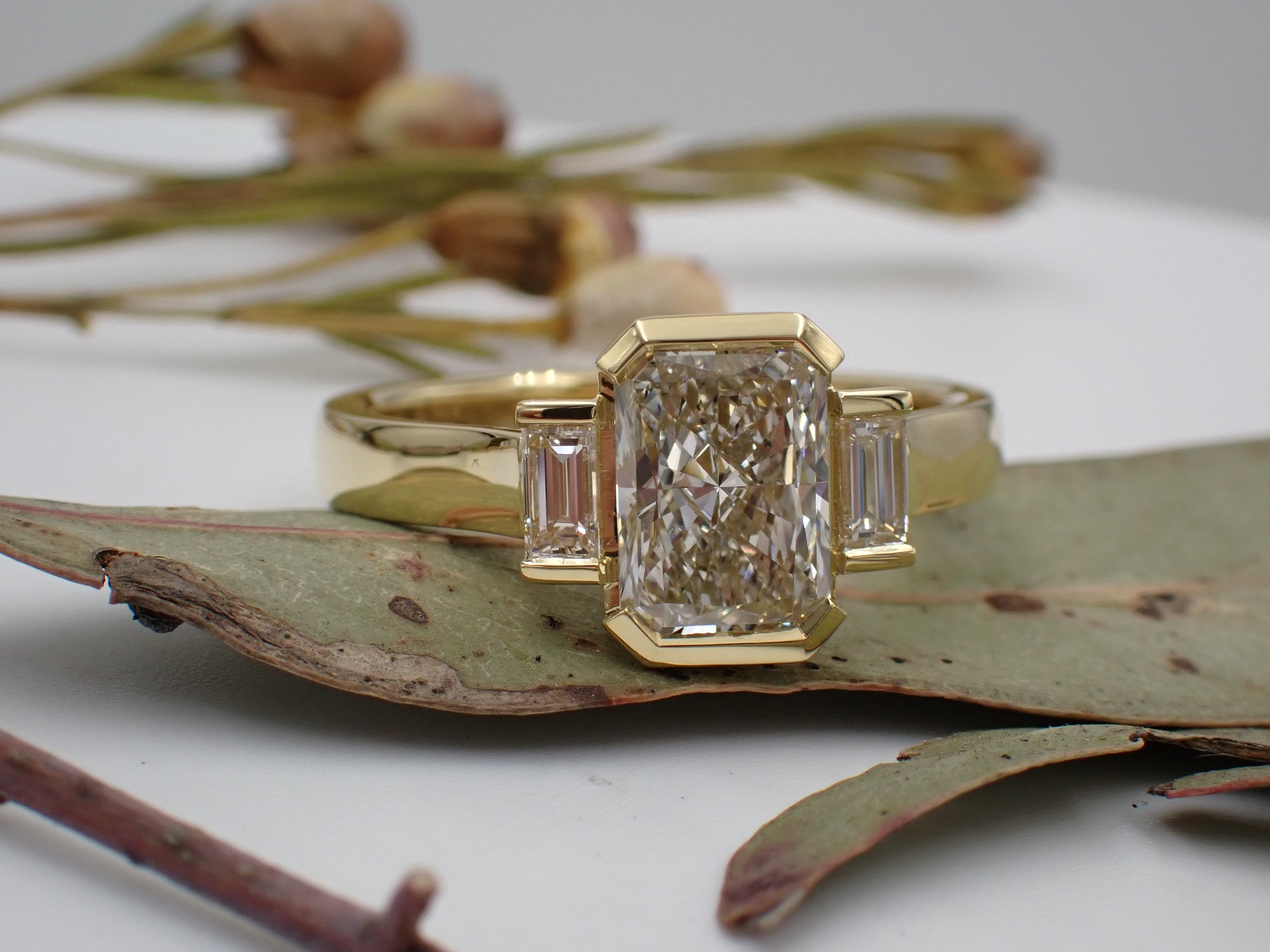
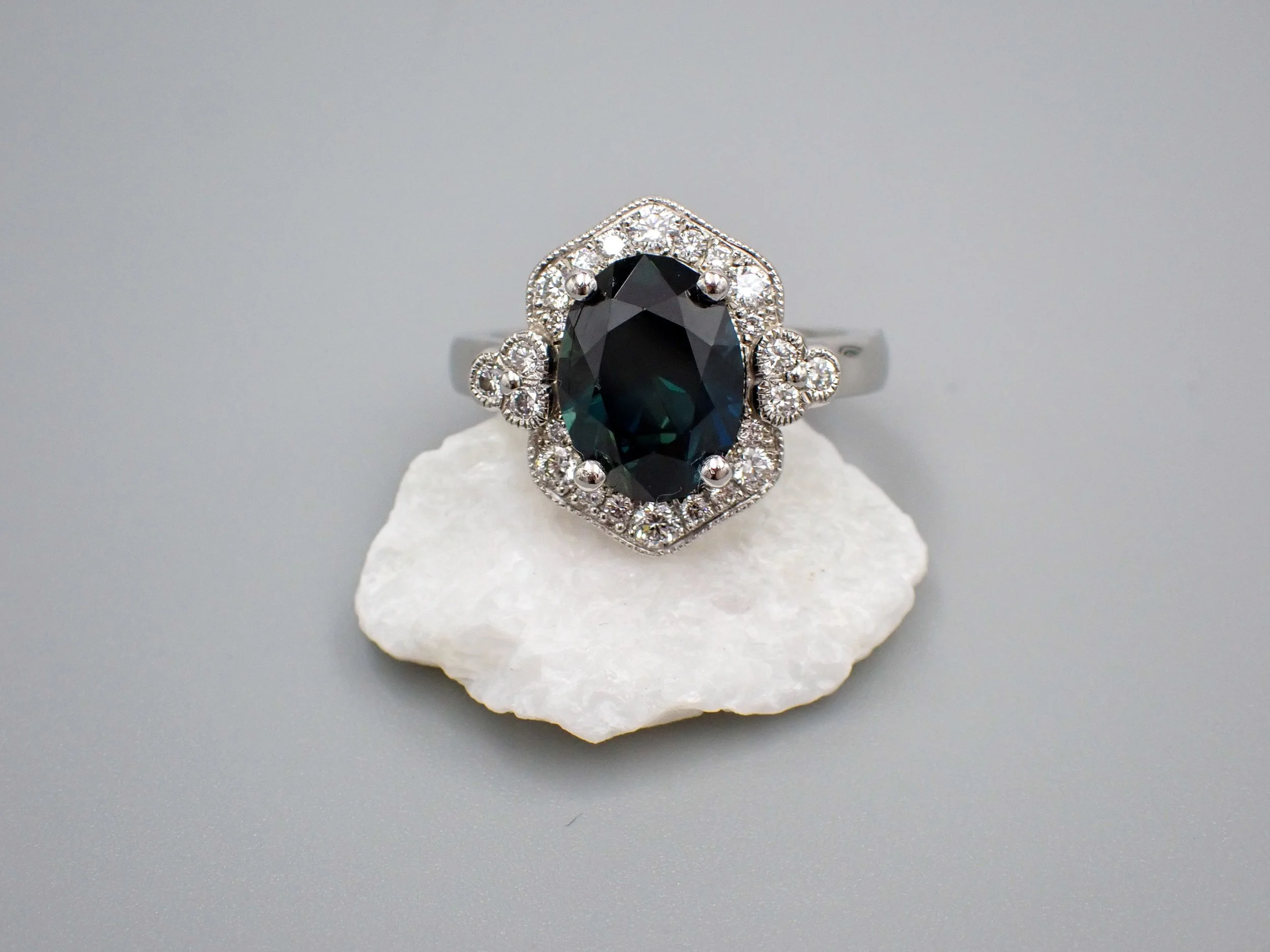
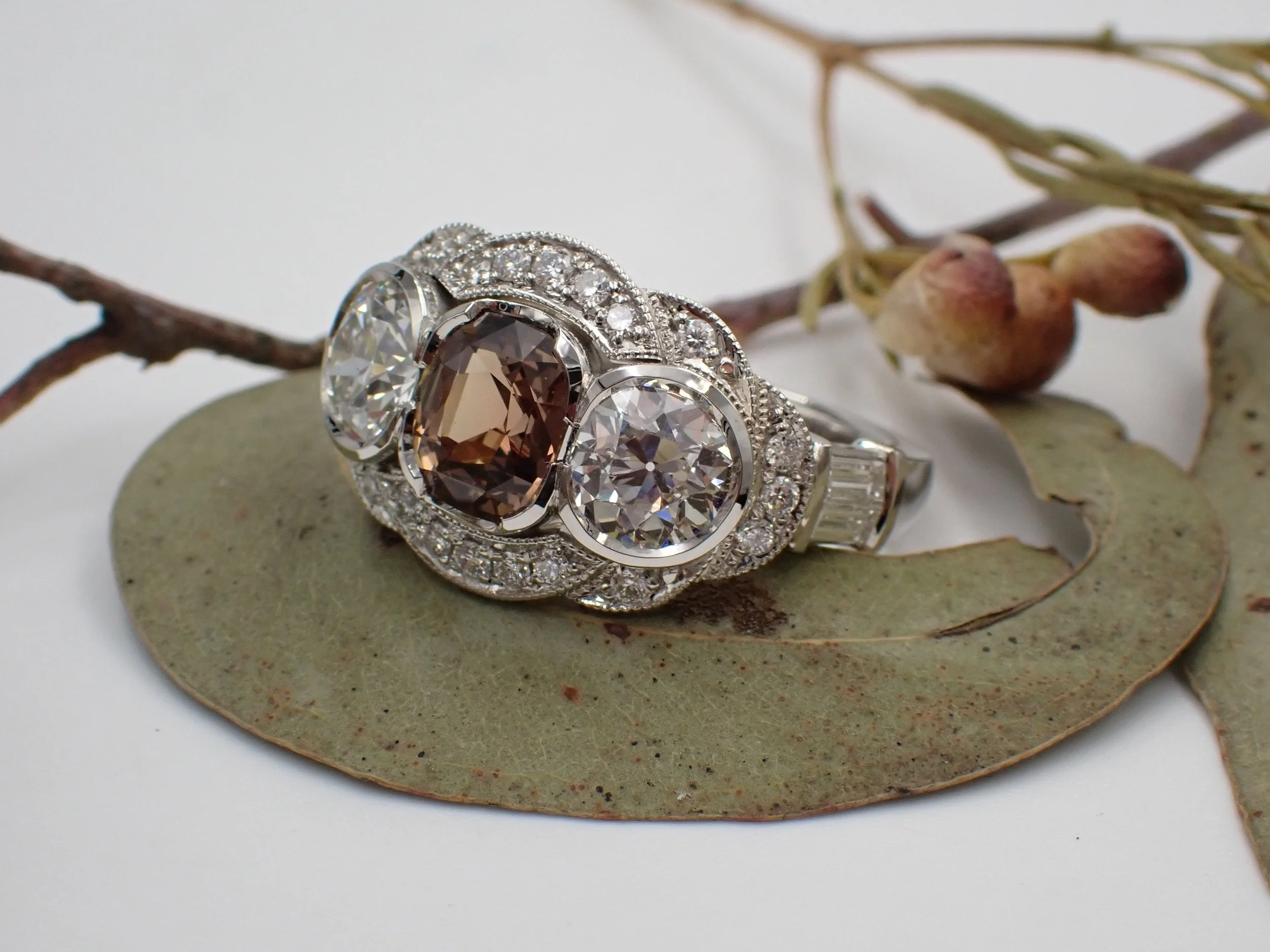
Whilst not limited to, typically an engagement ring has a larger central stone and is sometimes accompanied by smaller diamonds or gemstones set in precious metals like gold or platinum. Historically, (I’m talking only about the last couple of decades) the majority of engagement rings purchased were one of the styles below, all of which are considered a ‘classic’ design by today's standards. These styles are…
What finger is an engagement ring worn on?
Traditionally in Australia, an engagement ring is worn on the left hand ring finger as is the wedding ring. However some cultures across the world (Russia, India and Germany) wear their engagement rings on their right hand. Another variation is for the engagement ring to be on the right hand ring finger prior to marriage and then move to the left hand once married. The significance of the left hand ring finger is related to ‘vena amoris’ which is Latin for ‘vein of love’ as its believed in ancient cultures that this vein runs direct to the heart.
What if you have no idea what kind of engagement ring you're shopping for?
If you are quite literally a blank canvas, meaning you have no idea whatsoever what you or your partner would like in a ring we suggest you start with answering these questions:
Do you know if you would like a diamond or a coloured stone?
Do you prefer simple or complex or intricate jewellery designs?
Would you like the ring to be symmetrical or asymmetrical?
Is there a concept or idea you want to include in the design? i.e. floral patterns, art-deco, modern or perhaps some engraving.
We also like to find out a bit more about the wearer too, as personalities often align with styles and types of jewellery.
What kind of jewellery is worn by the recipient?
Is the person an adventurer or a quiet soul?
Do they appreciate fine art and sculpture or maybe pop-art or comics? There may be some things here to draw inspiration from.
Getting the surrounding facts helps us paint a picture of the wearer and are better able to suggest ideas too.
What if you want a unique engagement ring?
With the strengthening of our own personal identities in recent years and the increased desire to celebrate the uniqueness we all have, we are seeing so much diversity in the engagement ring market today. Which is a real treat for bench designers and jewellers like us. Let us tell you now though, being unique doesn’t mean you have to have a loud and cumbersome ring, there are so many ways we can tailor a design to suit you and your partner. Many of these ideas can come from answering the above questions. We are buzzing with ideas and love sharing them with you, so please let us know if this is a concept you'd like to hone in on.
What type of stones are best suited in engagement rings?
When considering stones for an engagement ring, we recommend 3 different types. This is purely based on the stones hardness and durability. What does this mean to you? Essentially is its ability to withstand the test of time. These days, an engagement ring is worn everyday and the materials used have to reflect this. More than ever, we are really active and busy people compared to that of a stay home parent of the 1930’s who only wore their ring to the shops and parties. Needless to say, rings of yesteryear were not subjected to the gruelling busy life like the ones of today. Thus the three stone varieties that can survive a battering are:
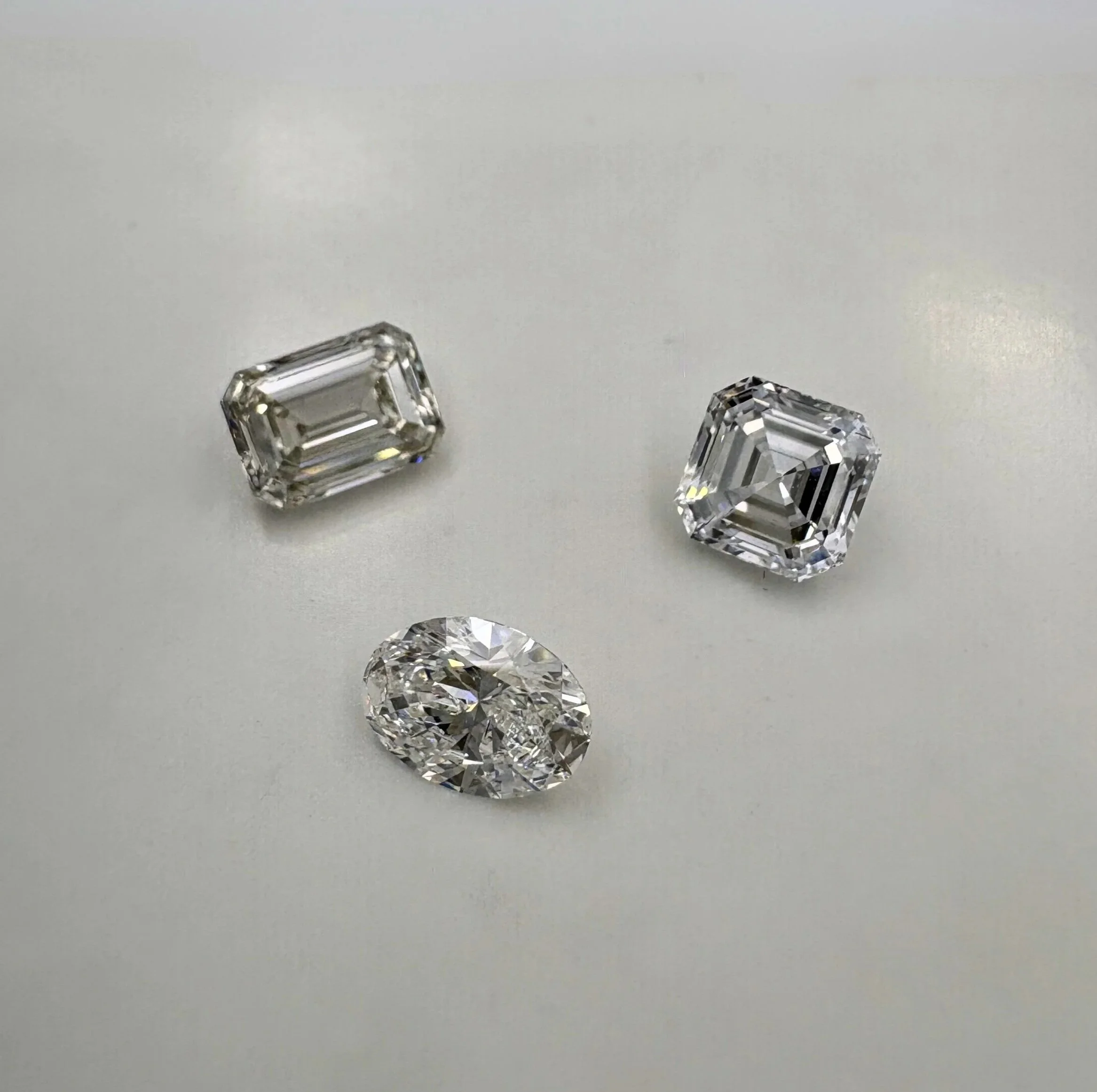
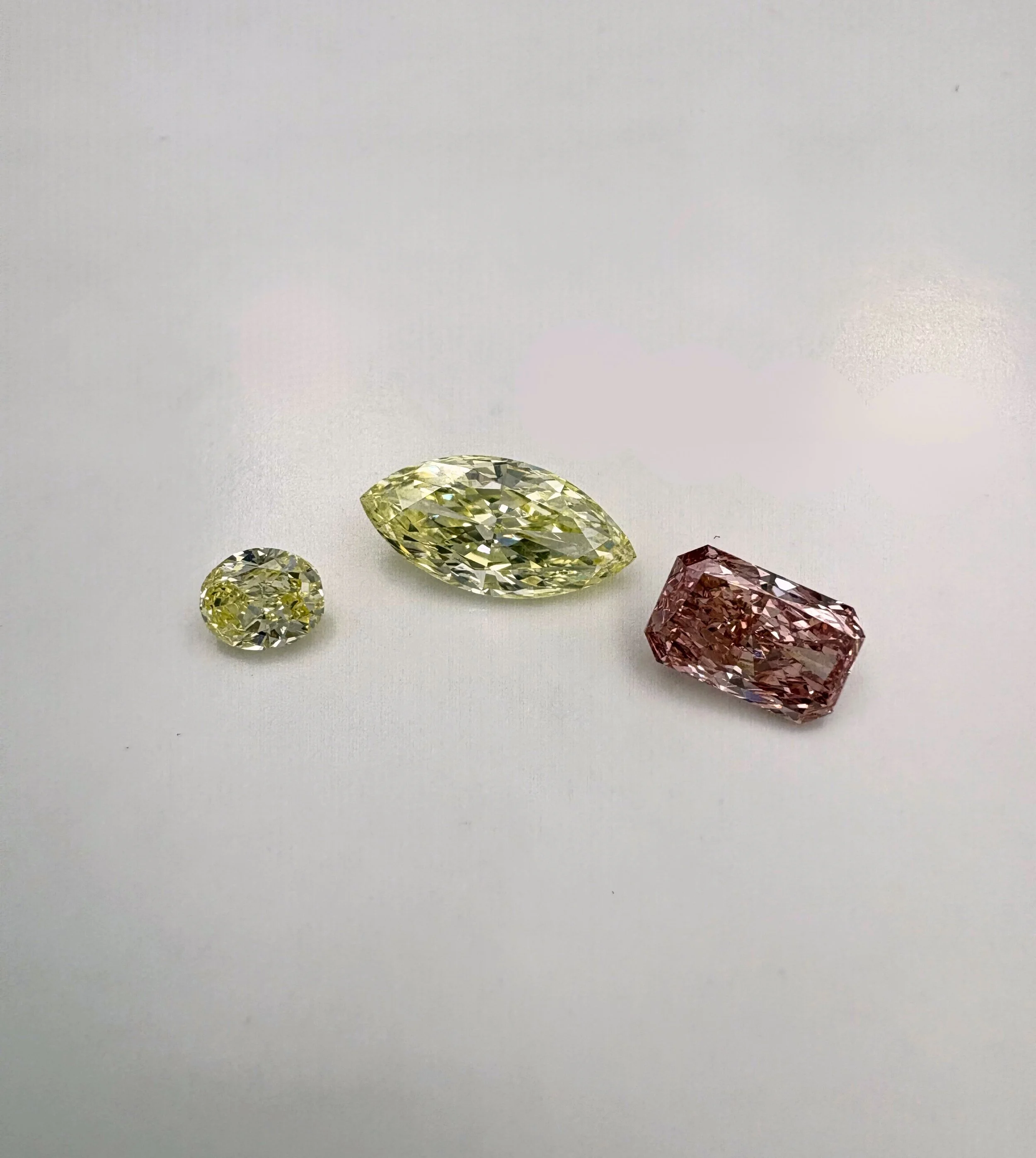
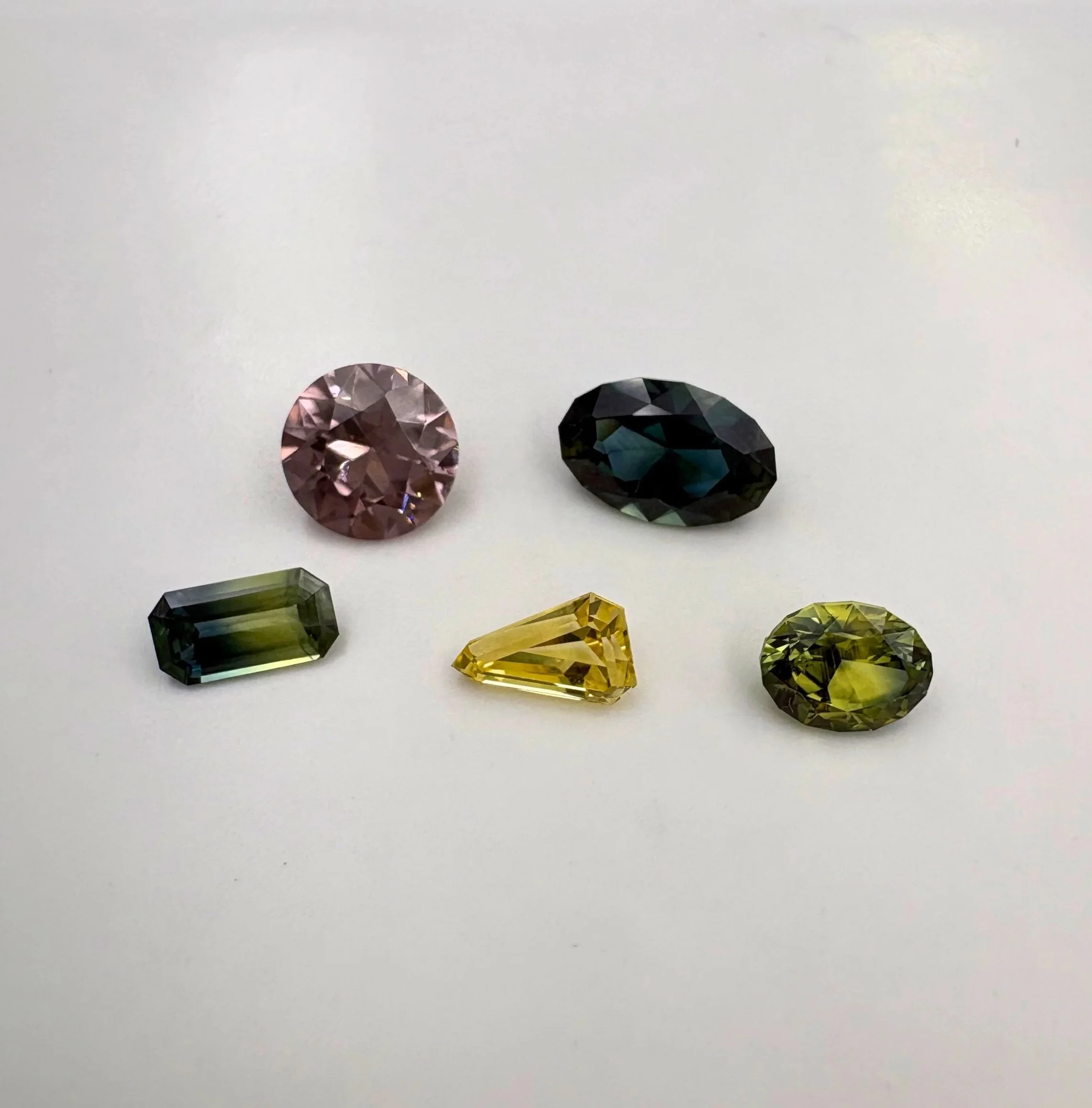
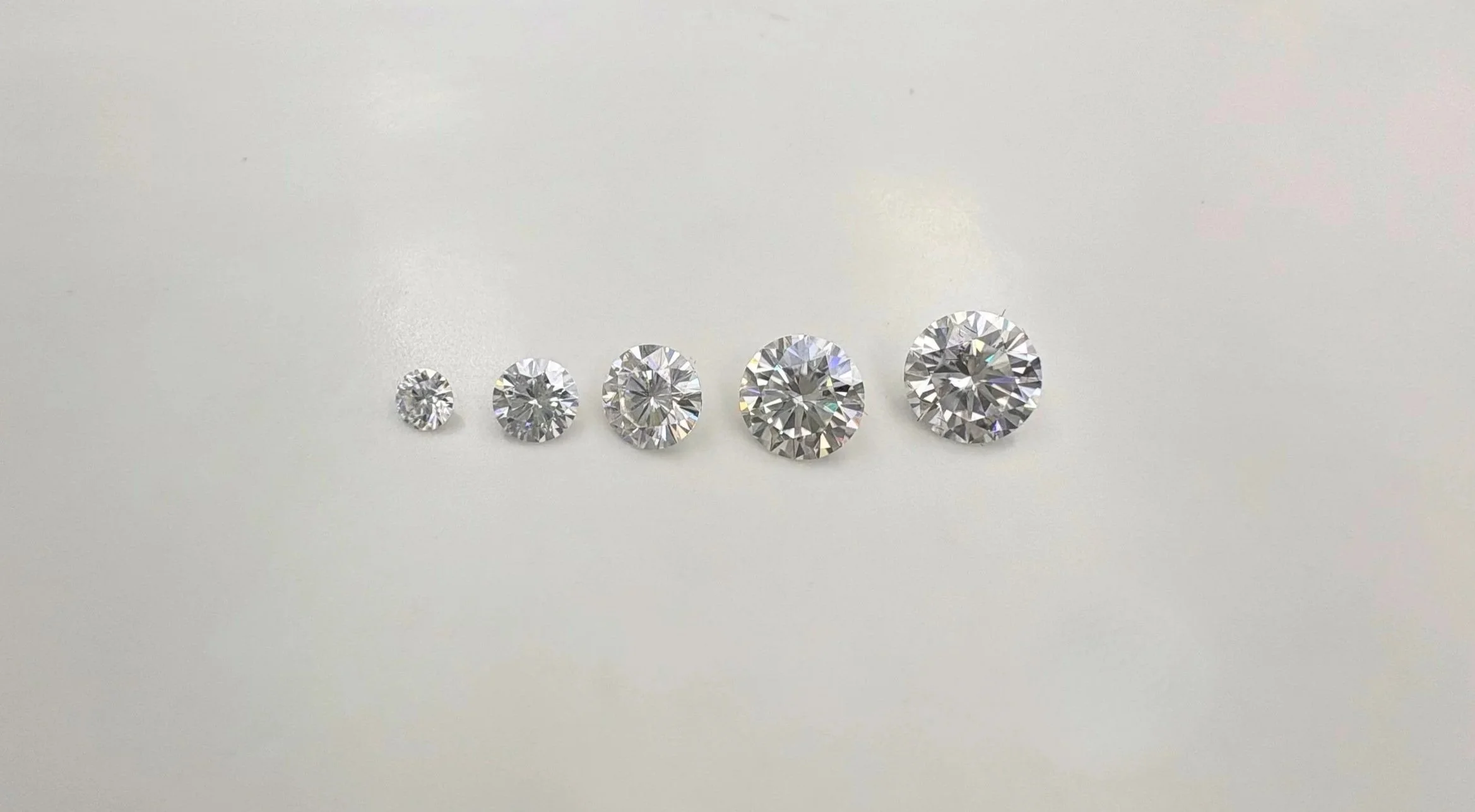
If a pop of colour is on your design list, we have you covered because within the three recommended stones above, just about every colour is available. Please ask us about more options.
Softer stones such as topaz, citrine, and those from the beryl family - aquamarine & emerald will scratch and visually degrade over time (faster than the above). Whilst it's not impossible to have a stone of the aforementioned, you will have to be extremely careful and expect to have the stone scuff or chip or worse, need replacing in 5-15 years.
It's also worth noting, that while diamonds are the hardest material known to man they are not indestructible. Diamonds can still chip and break under duress especially if their natural inclusions create a weakness in the stone, however they are ultimately the more durable and longest lasting stone and the best option for an engagement ring.
Want to know more about the different stone options available with us?
Read our sustainable jewellery pageWant to see a selection of our loose diamonds?
Browse our diamond collectionWant to see a selection of our loose gemstones?
Browse our gemstone collection
What Metal Should I Choose for an Engagement Ring?
For some, this is a no brainer as they know what colour or type of metal is preferred. This may be because the wearer only likes rose gold or can only wear yellow gold because of sensitive skin. For those who are not sure we will break it down into small digestible bites.
Most commonly today, engagement rings are made from gold (either 18ct or 14ct in three colours - yellow, rose & white) or platinum. Less common is palladium due to its exponential cost increase in recent years and silver because its too soft. Each metal has its pros and cons, and some excel in certain situations over others.
GOLD
There are 3 common carats of gold used to make jewellery. To best understand this, 24ct is pure (100%) gold and when pure gold is alloyed down (to make it harder as pure gold is too soft) it is then referred to as
18ct - 75% pure gold & 25% alloy
14ct - 58.5% pure gold & 41.5% alloy
9ct - 37.5% pure gold & 62.5% alloy
The act of alloying down 24ct gold is twofold, on the one hand it hardens the metal so it can be used to hold gems securely and not dent or wear away as quickly as 24ct gold would - which is extremely soft and malleable. Just adding 25% of alloy to 24ct to make it 18ct increases its durability drastically.
There are many discussions about whether 9ct is harder than 18ct because of the alloy content; however it's not as simple as that. Hardness and durability are different. In essence, 18ct and 14ct golds offer the best all-round characteristics and they are still a high content of gold (durable) which also means the rings won’t tarnish comparatively to 9ct where 62.5% is silver and copper alloy.
Furthermore, bridal jewellery is traditionally made from higher carat metals such as 18ct for it’s extra gold content which in-turn is considered a better 'investment' considering the investments and the stability of gold.
CONCLUSION: For all of the above reasons we recommend 18ct & 14ct (in any colour) for everyday jewellery. 9ct is often too soft for fine engagement rings so in this scenario its not the best option. The colour is really up to you, so this is something that can be used to personalise your engagement ring.
PLATINUM
Platinum is a naturally occurring white and very dense metal and requires a further refined skill set to work with, making it a luxurious and elite metal choice. The denseness of platinum makes it extremely hard wearing, especially when it comes to holding diamonds and gemstones so it's perfect for engagement rings. Quite often, it is compared to white gold in the following areas:
Colour
Comparatively, platinum is whiter and brighter to white gold. This is because white gold is derived from pure (yellow) gold and the alloys used in this make it a grey colour. This has lead to the common practice of rhodium plating white gold to make it the same white/bright colour as platinum. Rhodium plating is a process whereby white gold it is electroplated with a very fine layer of a pure, white metal, called rhodium. This masks the surface and creates the appearance of a brighter white, closer to that of platinum. To maintain this finish, re-plating is usually needed every 12-24 months. Unfortunately, Rhodium mining and extraction techniques have a detrimental effect on the environment, as do the harmful chemicals used in the electroplating process. So we have made the conscious decision not to plate any of our White Gold jewellery unless requested. So our jewellery has a distinct colour difference when comparing platinum to white gold. More often than not our clients prefer the natural colour of white gold, its a much warmer colour that accompanies a lot of coloured stones. All of our 14K and 18K White Golds are alloyed with Palladium, the whitest alloys available that do not contain nickel.
Longevity
Because of the metals density, it takes longer to wear away compared to 14ct or 18ct gold. However, platinum is quite malleable and will dent and scratch more than other metals but it won't wear down as fast.
Best application
For the reasons listed above, platinum is best when a whiter metal is preferred over a greyer and warmer (white gold) alternative. Its also best used for rings that have finer claws or delicate decorative elements. However, 18ct white gold is a better choice when you have engraving and milgrain, as it will hold firm on these pattern elements better.
CONCLUSION: A superior white metal that is long lasting, the downside is it comes at a higher cost to other options and is not ideal for all ring designs. Contact us through the form at the bottom of the page if you have a specific request and we can advise you on what is best.
SILVER
Lastly, although not impossible - we do not recommend having an engagement ring made from sterling silver. Silver is extremely soft and lightweight so it does not possess the same rigid and reliable strength properties of gold and platinum. Which again, is critical when holding expensive gems.
CONCLUSION: Not recommended as it’s not suitable in most engagement ring scenarios.
Wait, I've got more questions!
We hope this article has been helpful but if we've not answered all your questions or you're ready to talk to an expert, please fill in the contact form below and we can begin your bespoke engagement ring journey today.
Warmest Regards,
Jenna & Megan.
Read more from us at Webb + Steele…


We operate by appointment only.
Enquire now to book an appointment with us to bring your ideas into reality.
